
Flat Roof Repairs & New Flat Roofs
Proper flat roof advice from a local family-run roofing company
Flat roofs are one of those jobs where the cheapest quote can quickly become the most expensive mistake.
A badly repaired or poorly fitted flat roof usually does not fail quietly. It leaks into ceilings, holds water, cracks, blisters, lifts at the edges, and can rot the timber underneath before you realise how bad it has become.
At HoneyBee Roofing, we repair leaking flat roofs, replace failed flat roofs, and install new felt and GRP fibreglass systems for homes, garages, extensions and dormers.
We are a local family-run roofing company with over 50 years of roofing experience. We are not here to give the cheapest-looking price just to win the job. We are here to explain what is actually wrong, tell you whether a repair is realistic, and quote properly for work that is built to last.
Leaking flat roof? Send photos on WhatsApp or call HoneyBee Roofing for honest advice.
Get a free quote
Contact Us
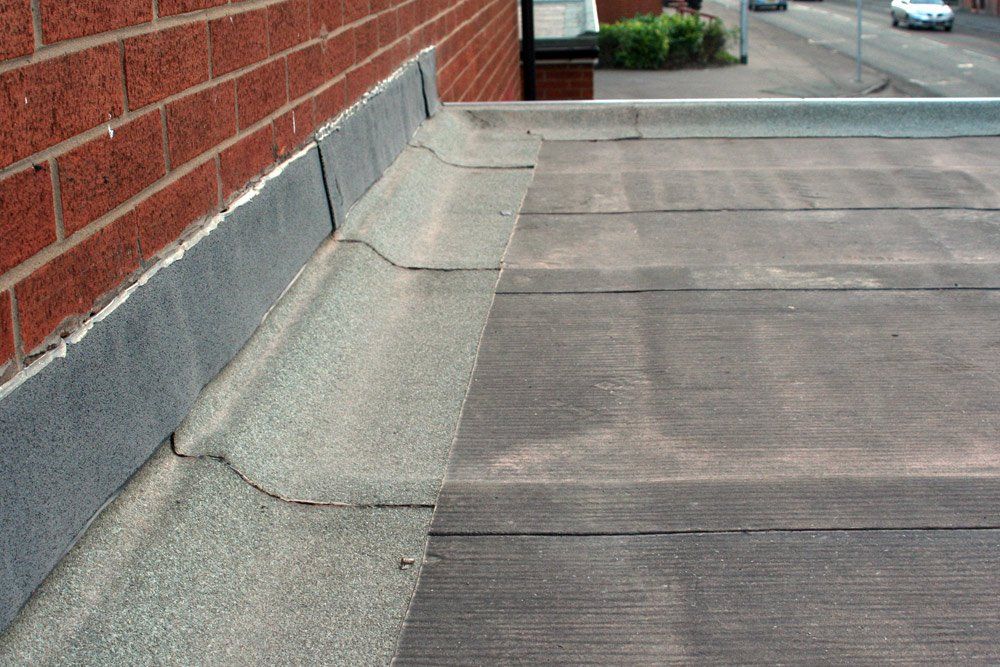
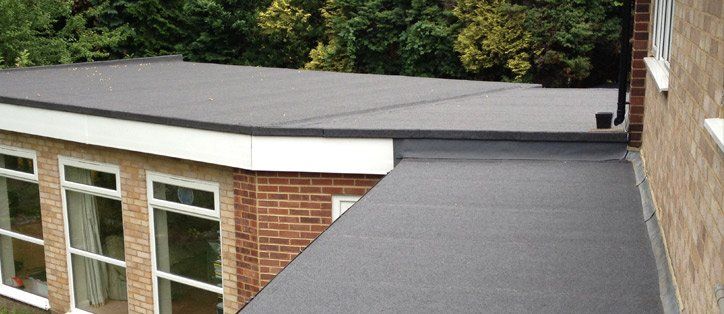
Concerned about leaky Flat roof?
Flat Roof Systems Explained Properly
Below is an in-depth look at the flat roof systems we offer: the good, the bad, where they work, where they fail, and what you should know before choosing one.
It is a lot of information, so you do not need to read it all. Just jump to the section that matches your roof and use it as a guide before getting in touch.
Jump to the flat roof section you need
Not every flat roof is the same. If you already know what type of roof you have, or what you are interested in, use the links below to jump straight to the right section.
- Built-Up Felt Flat Roofs
- GRP / Fibreglass Flat Roofs
- EPDM / Rubber Flat Roofs
- Liquid-Applied Flat Roofs
- Mastic Asphalt Flat Roofs
- Lead Flat Roofs / Lead Bays
- Green Roofs / Sedum Roofs
- Warm Roofs vs Cold Roofs
- Other Specialist Flat Roof Systems
BUILT UP FELT FLATROOFS
BUILT UP FELT FLATROOFS
Modern felt flat roofing is very different from the old roll of shed felt most people picture. A proper felt flat roof is usually built up in layers using reinforced bitumen membranes, with each layer doing a job: strength, waterproofing, movement control and weather protection.
When fitted correctly, a built-up felt roof is still one of the most reliable flat roof systems for garages, extensions, dormers, porches and outbuildings. It is tough, repairable, cost-effective and well suited to ALL domestic flat roofs.
The important words there are when fitted correctly.
A felt roof does not usually fail because “felt is bad”. It usually fails because the preparation was poor, the decking was rotten, the falls were wrong, the trims were weak, the edges were badly finished, or someone has patched over an old problem instead of fixing the actual cause.
What is a built-up felt flat roof?
A proper felt flat roof is normally made up from multiple layers, not one thin covering. The exact system depends on the roof, but a typical built-up felt roof may include:
- A prepared timber deck or suitable flat roof substrate
- Primer where needed
- A base layer or vapour control layer, depending on the roof design
- One or more reinforced underlayers
- A mineral cap sheet or final weathering layer
- Proper edge trims, upstands, outlets and flashing details
The top layer is the part most people see, but the roof underneath is what decides whether the job lasts.
Where felt flat roofing works well
Felt is a good option for many domestic flat roofs, including:
- Garage flat roofs
- Extension flat roofs
- Dormer flat roofs
- Porch roofs
- Bay window roofs
- Utility room roofs
- Outbuildings and garden rooms
It is especially useful where the roof has awkward details, joins, upstands, edges, old walls, pipes or areas that may need future repair access.
Our felt flat roof process
Before we recommend a repair or replacement, we look at the roof properly. A flat roof can look tired on top but still be repairable, or it can look fairly minor from above while the boards underneath are already rotten.
Our usual process is:
1. Check the existing roof
We look for splits, bubbles, lifted laps, cracked edges, soft decking, standing water, failed trims, bad previous repairs and signs of leaks inside the property.
This matters because a small leak on the surface can sometimes be repaired, but a roof with rotten boards or failed falls needs more than another patch.
2. Check the falls and drainage
A flat roof should not really be dead flat. It needs to move water towards the gutter, outlet or drip edge. If water sits in the same place for days, it puts extra stress on the roof and shortens the life of the system.
Poor falls are one of the biggest reasons flat roofs keep failing, even after they have been re-covered.
3. Inspect the decking
If the roof is being replaced, the old covering is stripped back so the deck can be checked. Any rotten, soft or delaminated boards should be replaced before the new system goes down.
Laying a new felt system over a bad deck is false economy. It may look fine on the day, but the roof underneath is already moving, flexing or holding moisture.
4. Prepare the roof properly
Good flat roofing is mostly preparation. The surface needs to be sound, dry, clean and suitable for the system being fitted.
Edges, corners, outlets and upstands need careful preparation because these are the places where flat roofs most often fail.
5. Fit the correct felt system
A proper felt roof is built in layers. The system may vary depending on whether the roof is cold roof, warm roof, garage roof, dormer roof or extension roof, but the aim is always the same: a strong, sealed, weatherproof finish with proper detailing.
The layers need to be bonded correctly, lapped correctly, dressed into the edges properly and finished with suitable trims and flashings.
6. Pay attention to details
Most felt roofs do not fail in the middle. They fail at the details.
That means:
- Edges
- Corners
- Drips
- Wall abutments
- Outlets
- Pipes
- Skylights
- Door thresholds
- Parapet walls
- Joins to pitched roofs
These areas need more care than the open flat area of the roof. Rushing the details is how leaks are built into the job from day one.
7. Leave the roof tidy and guaranteed
Once complete, the roof should be checked, cleared, photographed where useful, and the guarantee paperwork left with the customer.
A flat roof is not just about making it waterproof today. It should be fitted so it has the best chance of staying waterproof through heat, frost, rain, movement and normal wear over time.
Common felt flat roof problems
We regularly see felt roofs with:
- Splits in the surface
- Blisters or bubbles
- Cracked mineral felt
- Lifted laps
- Failed edge trims
- Rotten decking underneath
- Water sitting in low spots
- Poor previous patches
- Felt pulling away from walls
- Leaks around outlets or pipes
- Old felt laid over old felt too many times
Some of these can be repaired. Some mean the roof has reached the end of its life.
Can a felt flat roof be repaired?
Yes, sometimes.
If the roof is generally sound and the problem is localised, a repair may be the sensible option. For example, a split, lifted edge, small puncture, failed trim or localised leak may not need a full replacement.
But if the felt has failed across the roof, the boards are rotten, water is sitting everywhere, or the roof has already had years of patch repairs, replacement is normally the better long-term answer.
We will always tell you which route makes sense. We would rather give honest advice than sell a new roof where a proper repair would do.
Is felt better than fibreglass or rubber?
There is no single best flat roof system for every roof.
Felt can be excellent when fitted properly, especially on garages, extensions and dormers. GRP fibreglass can work well on the right roof with the right preparation. Rubber roofing can be a good option on some simpler roofs with fewer details.
The right answer depends on the roof shape, size, access, details, drainage, existing structure, budget and how the roof is used.
That is why we do not push one system for every job. We look at the roof first, then recommend what actually suits it.
Why choose HoneyBee Roofing for a felt flat roof?
HoneyBee Roofing is a local family-run roofing company with over 50 years of roofing experience. We are not interested in rushing a cheap covering over a bad roof and hoping for the best.
We check the roof properly, explain what is wrong, use proper materials, and give written estimates so you know what is included before work starts.
If your felt flat roof is leaking, blistering, holding water or looking past its best, call HoneyBee Roofing or send photos on WhatsApp for honest advice.

GRP / FIBREGLASS FLAT ROOFS
GRP, often called fibreglass roofing, can be a very good flat roof system when it is installed properly. It creates a hard, seamless waterproof surface and gives a clean modern finish that works well on many garages, extensions, dormers, porches and small flat roofs.
But GRP is also one of the most unforgiving flat roof systems when corners are cut.
A felt roof can sometimes tolerate a little bit of movement. A rubber roof can often move with the building. GRP is different. Once it is cured, it becomes a rigid shell. That means the deck underneath has to be right. If the boards move, flex, expand, shrink or open up at the joints, the fibreglass surface can crack.
This is one of the biggest problems we are seeing at the moment. A lot of the GRP roofs we are being asked to replace have not failed because “fibreglass is bad”. They have failed because they were laid over poor decking, unsupported board joints, the wrong boards, badly fixed boards, or roofs that were never suitable for GRP in the first place.
A GRP roof is only as good as the deck underneath it.
What is a GRP flat roof?
GRP stands for glass reinforced plastic. On a flat roof, it usually means a resin and fibreglass matting system laid over a prepared timber deck, then finished with a protective topcoat.
The finished roof should be:
- Seamless across the main roof area
- Hard wearing
- Waterproof
- Neat around edges and trims
- Resistant to normal weathering
- Suitable for many domestic flat roofs
When done well, GRP gives a smart, clean finish. When done badly, it can crack, lift, split at the joints, leak around trims, or fail far earlier than it should.
Where GRP roofing works well
GRP can work well on:
- Garage flat roofs
- Small extension roofs
- Dormer roofs
- Porch roofs
- Bay window roofs
- Outbuildings
- Roofs with a clean, simple shape
- Roofs where a neat seamless finish is wanted
It is often best suited to smaller or medium-sized roofs with a solid deck, good falls, sensible detailing and not too much building movement.
Where GRP may not be the best choice
GRP is not always the right answer.
It may not be ideal where the roof has excessive movement, very large unsupported areas, poor structure, awkward expansion issues, complex detailing, constant foot traffic, bad falls, or a deck that cannot be properly prepared.
This is why we do not push GRP on every flat roof. The roof has to suit the system.
Some companies sell fibreglass as if it is automatically the premium option. We do not look at it like that. Felt, GRP and rubber all have their place. The right roof system depends on the roof underneath, the shape, the size, the drainage, the details and the way the building moves.
The biggest GRP problem: movement
Most failed GRP roofs we see have one thing in common: movement.
GRP does not like movement underneath it. If the boards are badly supported, wrongly fixed or not designed properly, the roof can crack along the board joints.
This often happens when:
- Standard square-edge boards are used instead of proper tongue-and-groove boards
- Board joints are not supported
- The boards are not fixed properly
- The boards are too thin or poor quality
- The deck is damp when the system is installed
- The existing structure flexes too much
- The roof has been over-boarded badly
- No allowance has been made for expansion and contraction
- The resin has been laid too thin
- The topcoat has been applied badly
- The roof was installed in poor weather conditions
The customer usually only sees the crack on top. The real problem is often underneath.
Why tongue-and-groove boards matter
A proper GRP roof should usually be laid onto a suitable prepared deck, commonly using OSB3 tongue-and-groove boards.
Tongue-and-groove boards help lock the deck together and reduce movement between board edges. This is important because the fibreglass layer sits directly on top. If one board edge moves differently to the next, the stress can transfer into the GRP surface.
This is where a lot of poor GRP jobs fail.
If the installer uses the wrong boards, leaves unsupported joints, or does not strengthen the deck properly, the roof can look perfect when it is first finished but start cracking later.
The shiny finish is not the quality of the job. The preparation underneath is.
Our GRP flat roof process
Before recommending GRP, we look at whether the roof is actually suitable for it.
1. Check the existing roof and structure
We look at the current roof covering, deck condition, joist structure, falls, trims, upstands, drainage points, leaks and any signs of movement.
If the roof is already flexing badly, holding water, or has rotten timber underneath, GRP should not simply be laid over the top.
2. Strip back where needed
If the roof has failed or the deck is questionable, the old covering needs to come off so the boards and structure can be inspected properly.
Covering over old problems is one of the quickest ways to ruin a new GRP roof.
3. Check the deck
This is the most important part.
The deck must be sound, dry, clean, properly fixed and suitable for GRP. Any rotten, soft, loose or moving boards should be replaced.
Board joints need to be properly supported. Weak joints are one of the main causes of cracking in GRP flat roofs.
4. Use the right boards
Where a new deck is being fitted for GRP, the correct board choice matters. Tongue-and-groove OSB3 is commonly used because it gives a stronger, more stable base for the GRP system.
Cheap board choice can make the job look cheaper on paper, but it can cost the customer heavily later.
A GRP roof is not the place to save a few pounds on the deck.
5. Fix the boards properly
The boards need to be fixed securely and laid correctly. Any movement in the deck can become movement in the roof covering.
Poor fixing, unsupported edges and loose boards are all problems that may not be obvious on day one but can show up later as cracks, splits or leaks.
6. Check the falls and drainage
A GRP roof still needs to drain. It should not be treated as a magic waterproof tray that can hold standing water forever.
If water sits on the roof, it can stain the surface, expose weak details and speed up problems over time. Good falls, good outlet positions and clean drainage details are still important.
7. Prepare edges, trims and upstands
Most flat roofs fail at the details, not in the middle.
With GRP, the trims, corners, wall upstands, outlets, door thresholds, skylights and joins need proper care. These areas should be clean, secure and detailed correctly before the resin and matting are applied.
A rushed trim detail can ruin an otherwise good roof.
8. Apply the fibreglass system correctly
The resin, matting and topcoat all need to be applied in the right conditions and at the right thickness.
If the resin is too thin, the matting is not properly wetted out, the weather is wrong, or the topcoat is badly applied, the roof can be weak from the start.
The finish should not just look good. It needs to be properly bonded, properly cured and properly protected.
9. Check the finished roof
Once complete, the roof should be checked for finish, trims, outlets, edges, upstands and any obvious weak points.
The customer should be left with a tidy roof, clear advice and guarantee paperwork where applicable.
Common GRP flat roof problems
We regularly see GRP roofs with:
- Cracks along board joints
- Cracks around corners
- Splits near trims
- Poorly fitted edge trims
- Lifting around upstands
- Leaks around outlets
- Thin or patchy resin
- Topcoat peeling
- Poor bonding to the deck
- Movement cracks
- Water sitting on the roof
- Failed repairs over cracked GRP
- Poorly supported board joints
- Wrong boards used underneath
- Fibreglass laid over damp or rotten decking
The most common one at the moment is cracking caused by poor decking and unsupported board joints.
That is not a small surface issue. If the roof is cracking because the deck is moving, the actual problem is structural movement underneath the GRP.
Can a GRP roof be repaired?
Sometimes, yes.
If the problem is small and localised, a GRP repair may be possible. For example, a minor crack, damaged trim, small impact mark or local leak may be repairable if the rest of the roof is sound.
But if the roof is cracking along multiple board joints, lifting in several places, leaking around lots of details, or moving underneath, patching the surface is usually not a proper long-term repair.
You cannot permanently fix a moving deck by painting over the crack.
If the deck is the problem, the roof usually needs to be stripped, re-boarded correctly and re-covered.
Is GRP better than felt?
Not always.
GRP can give a clean, seamless finish and works very well on the right roof. Felt can be more forgiving on certain roofs and is often a strong choice for garages, extensions and dormers. Rubber can be useful on some simpler roofs.
The best system depends on the roof.
If a roof has lots of movement, awkward details or poor structure, GRP may not be the best option. If the roof has a solid deck, good falls and suitable detailing, GRP can be excellent.
We would rather recommend the right system than push the most expensive-sounding one.
Why do so many GRP roofs fail?
Most failed GRP roofs we see fail because of poor preparation, not because GRP itself is useless.
Common causes include:
- Wrong boards
- No tongue-and-groove decking
- Unsupported board joints
- Damp deck
- Rotten deck
- Poor fixing
- Bad trims
- Poor falls
- Thin resin
- Poor curing conditions
- Bad detailing around walls and outlets
- GRP installed on a roof that moves too much
The roof may look great when first installed, but if the base is wrong, the finish is only hiding the problem for a while.
Why choose HoneyBee Roofing for a GRP flat roof?
HoneyBee Roofing is a local family-run roofing company with over 50 years of roofing experience. We do not treat GRP as a one-size-fits-all answer.
We check the roof properly, look at the deck, explain whether GRP is suitable, and make sure the preparation is right before the system goes down.
If GRP is the right choice, we will tell you. If felt or another system would suit the roof better, we will tell you that too.
We are not here to sell the shiniest roof. We are here to fit the right roof properly.
If your GRP flat roof is cracked, leaking, lifting or showing lines along the board joints, call HoneyBee Roofing or send photos on WhatsApp for honest advice.
EPDM / RUBBER FLAT ROOFS
EPDM / Rubber Flat Roofs
EPDM, often called rubber roofing, is another flat roof system used on garages, extensions, dormers, porches and outbuildings. It is a flexible rubber membrane that is usually bonded to the roof deck and finished with trims, outlets, wall details and edge details.
Rubber roofing can work well on the right roof, but we will be honest: it is not usually our first recommendation for many domestic flat roofs.
That does not mean EPDM is a bad product. It means we are careful about where we use it.
In our experience, a properly fitted felt system is often stronger, more practical, easier to repair, better around awkward details, and better suited to many of the flat roofs we see locally. Rubber can look simple because it is often sold as one large sheet, but the roof still relies heavily on the preparation, adhesive, trims, corners, outlets and wall details.
A flat roof does not just fail in the middle. It fails at the edges, joins and details. That is where rubber roofs can let customers down when they are fitted badly.
Our honest view on rubber roofing
EPDM has its place. It can be a good option on simple, clean, straightforward roofs with good falls, a sound deck and limited awkward detailing.
But we do not believe rubber should be pushed as the best answer for every flat roof.
The common problems we see with rubber roofs are:
- Poorly bonded membrane
- Loose or badly fitted trims
- Failed corners
- Weak outlet details
- Rubber pulling away from edges
- Wrinkles and trapped air
- Leaks around walls and upstands
- Poor preparation underneath
- Membrane damaged by sharp edges or foot traffic
- Repairs that look messy and do not blend in well
- Cheap systems fitted like a DIY kit
Rubber roofing is often advertised as simple. The problem is that “simple” can quickly become “rushed”.
A sheet of rubber is not a flat roof on its own. The details make or break the job.
What is an EPDM rubber roof?
EPDM is a synthetic rubber membrane used as a waterproof covering for flat roofs. On many domestic roofs, the membrane is laid in one large sheet where possible, bonded to the prepared deck, and finished around the perimeter with trims and sealants.
The main selling points are:
- Flexible membrane
- Fewer joins on simple roofs
- No torch flame during installation
- Good movement tolerance
- Can suit some larger simple roof areas
- Often quicker to install than some other systems
Those points can be true, but they do not automatically make it the best system.
The roof still needs a sound deck, proper falls, dry installation conditions, correct adhesive use, secure trims and well-finished details.
Where rubber roofing can work well
EPDM can be suitable for:
- Simple garage roofs
- Garden room roofs
- Basic outbuildings
- Larger plain roof areas
- Roofs with fewer awkward details
- Roofs where avoiding torch work is preferred
- Some lightweight structures
- Some roofs where flexibility is useful
It works best when the roof is clean, simple, dry, well-boarded and has sensible drainage.
Where rubber roofing may not be the best choice
Rubber may not be our preferred option where the roof has:
- Lots of awkward corners
- Multiple outlets
- Pipes through the roof
- Poor wall upstands
- Complicated edges
- Heavy foot traffic
- Weak or uneven decking
- Poor drainage
- Lots of joins or details
- A roof shape that needs a more worked-in system
- Areas where future patch repairs need to look neat
This is where we will often lean towards a properly installed felt system instead.
Felt is not automatically better on every single roof, but on many domestic roofs it gives a stronger, more traditional, repairable finish with better detailing options.
The biggest rubber roof problem: the details
Most rubber roof failures are not because the rubber sheet has randomly failed in the middle.
The problems usually happen at the details.
That means:
- Edges
- Trims
- Corners
- Gutters
- Outlets
- Wall upstands
- Door thresholds
- Pipe penetrations
- Joins to other roofs
- Skylights
- Areas where the membrane has been stretched, folded or cut badly
If the membrane is not bonded correctly, if the trims are weak, or if the corners are rushed, the roof can start lifting, leaking or pulling away.
Rubber needs neat, careful detailing. It is not just a case of rolling out a sheet and calling it finished.
Adhesive and weather matter
Rubber roofing depends heavily on adhesive. If the conditions are wrong, the bond can suffer.
The deck needs to be dry. The membrane needs to be fitted in suitable weather. The adhesive needs to be used correctly. If the roof is fitted in damp, cold, rushed or unsuitable conditions, problems can be built into the roof from day one.
This is one reason we are cautious with rubber roofs.
With felt, there is more ability to work and dress the material into details. With rubber, the adhesive bond and trim details are doing a lot of the work.
Deck preparation still matters
Like every flat roof system, rubber is only as good as what it is laid on.
The deck should be:
- Sound
- Dry
- Clean
- Properly fixed
- Smooth enough for the membrane
- Free from sharp edges
- Free from rotten or loose boards
- Suitable for the system being fitted
Rubber can be punctured or damaged if it is laid over rough, sharp or badly prepared areas. It can also show imperfections underneath, especially if the deck is uneven.
A new membrane over a bad deck is still a bad roof.
Our rubber roof process
Before recommending EPDM, we look at whether the roof actually suits it.
1. Check the roof shape
We look at the size, shape, access, drainage, outlets, wall details, edges and number of awkward areas.
If the roof is simple and clean, rubber may be suitable. If the roof has lots of complicated details, felt may be the better answer.
2. Check the existing roof
We check for leaks, ponding water, soft decking, poor repairs, weak trims, rotten edges and any internal signs of water damage.
A rubber roof should not be used to hide an old problem.
3. Inspect the deck
If the old covering is being removed, the deck needs to be checked properly.
Any rotten, soft, damp or damaged boards should be replaced. Loose boards should be fixed. Sharp edges should be removed. The surface should be suitable before any membrane goes down.
4. Check the falls
Rubber is waterproof, but that does not mean the roof should be treated like a pond.
A flat roof still needs to move water away properly. If water sits in low areas, it can expose weaknesses at trims, outlets and details over time.
Good drainage still matters.
5. Prepare the edges and trims
The edge details are critical.
The membrane has to finish properly into trims, gutters, wall upstands and outlets. If the edges are weak, the roof can start to lift or leak.
This is one of the main places where cheap rubber roofs fail.
6. Lay out and relax the membrane
EPDM is usually laid out and allowed to relax before it is bonded. This helps reduce wrinkles and tension in the sheet.
If the membrane is rushed, stretched, folded badly or trapped with tension in it, problems can show later.
7. Bond the membrane correctly
The adhesive must be applied correctly and in suitable conditions.
Poor bonding can lead to bubbles, loose areas, lifting edges, wrinkles or failure around details.
A rubber roof is not just about the membrane. The bond underneath is part of the roof system.
8. Finish the details properly
Corners, outlets, wall details, trims, pipes and thresholds need proper care.
These are the areas that decide whether the roof lasts.
A large rubber sheet can keep the middle of the roof dry, but badly finished details can still let water in.
9. Check the finished roof
Once complete, the roof should be checked for loose areas, wrinkles, weak trims, outlet details, edge details and any obvious problems.
The roof should be left clean, tidy and properly finished.
Common rubber roof problems
We regularly see rubber roofs with:
- Lifting edges
- Loose trims
- Wrinkles
- Bubbles
- Poor bonding
- Failed corners
- Leaks around outlets
- Leaks around wall details
- Membrane pulling away
- Punctures
- Damage from foot traffic
- Poor patch repairs
- Water sitting on the roof
- Poorly prepared decking underneath
- Cheap DIY-style installation
A rubber roof can fail very quickly if the details are poor.
Can a rubber roof be repaired?
Sometimes.
Small punctures, minor loose areas, local trim issues or certain detail failures may be repairable if the rest of the roof is sound.
But if the membrane is lifting in several places, badly bonded, wrinkled across the roof, leaking at multiple details, or fitted over poor decking, patching may not be the best long-term answer.
A failed rubber roof often needs more than another patch over the top.
Is rubber better than felt?
Not in our opinion for many domestic flat roofs.
Rubber has advantages on some roofs, especially simple roofs with fewer details. But felt is often our preferred choice because it is strong, proven, repairable, and works well around the kind of details we see on garages, extensions, dormers and older properties.
A good felt roof usually gives a more solid, worked-in finish. It can be dressed into details, built up in layers, and repaired more neatly if needed later.
That does not mean felt is always the answer. It means we choose the system based on the roof, not based on what is easiest to sell.
Why choose HoneyBee Roofing for rubber roof advice?
HoneyBee Roofing is a local family-run roofing company with over 50 years of roofing experience. We do not push one flat roof system as the answer to everything.
If rubber suits your roof, we will say so. If felt is the better option, we will explain why.
Our job is not to sell the trendiest roof covering. Our job is to recommend the roof system that gives you the best long-term result.
If your rubber flat roof is leaking, lifting, wrinkled, poorly bonded or failing at the edges, call HoneyBee Roofing or send photos on WhatsApp for honest advice.
MASTIC ASPHALT FLAT ROOFS
Mastic Asphalt Flat Roofs
Mastic asphalt is one of the older traditional flat roof systems. Years ago, it was much more common on domestic flat roofs, bay roofs, balconies, porches, walkways and commercial buildings.
We will be brutally honest though: for most normal domestic flat roofs, asphalt is not usually our first recommendation anymore.
That does not mean asphalt is useless. A properly laid mastic asphalt roof can be very strong, waterproof and long lasting. But it is a more specialist system, it needs the right installer, the right base, the right detailing and the right roof. For most garages, extensions and dormers we see today, a properly installed felt system is usually the more practical choice.
A lot of homeowners do not ask for asphalt anymore. Most want felt, GRP or rubber because those are the systems they hear about. In our opinion, if you want a strong, reliable, repairable domestic flat roof, built-up felt is usually the better starting point.
What is a mastic asphalt flat roof?
Mastic asphalt is a hot-applied waterproofing material made from bitumen and mineral materials. It is laid hot and worked into place to create a seamless waterproof layer.
It is not the same thing as felt.
Felt roofs are built up using reinforced bitumen membranes in layers. Mastic asphalt is poured or laid hot and finished as a dense waterproof surface.
When installed properly, asphalt can be tough, seamless and hard wearing. That is why it has been used historically on flat roofs, balconies, walkways, steps and commercial areas.
But it is not a simple system. It is specialist work.
Our honest view on asphalt roofing
For most domestic flat roofs, we would not push asphalt as the first choice.
The reasons are simple:
- Fewer roofers specialise in it properly now
- It is more specialist to install and repair
- It involves hot works
- It can be more expensive than other practical systems
- It can be harder to patch neatly
- It is not always ideal over timber roofs with movement
- Many domestic roofs are better suited to modern felt systems
- Customers often struggle to find someone to maintain it properly later
Asphalt can be excellent in the right place, but “excellent in the right place” is not the same as “best for every garage or extension roof”.
For most everyday domestic flat roofs, felt is usually the system we would talk about first.
Where asphalt roofing can still work well
Mastic asphalt may still be suitable for:
- Balconies
- Walkways
- Steps
- Commercial roofs
- Some concrete decks
- Heritage or listed-style buildings
- Areas needing a tough surface
- Certain specialist waterproofing jobs
- Roofs where asphalt is already part of the existing design
It is often better suited to solid, stable structures rather than lightweight domestic roofs with lots of timber movement.
Where asphalt may not be the best choice
Asphalt may not be ideal for:
- Small domestic garages
- Timber roofs with movement
- Simple extension roofs where felt would do the job better
- Dormers with awkward details
- Low-budget repairs
- Roofs where future repair access matters
- Customers who want simple maintenance
- Roofs where finding a specialist later may be difficult
This is why we are careful with it.
We would rather recommend a system that suits the roof and the customer long term, not just recommend something because it sounds traditional or premium.
The biggest asphalt issue: it is specialist
The main issue with asphalt is not that the material is bad. The issue is that it has to be done properly.
A poor asphalt job can crack, blister, slump, split, pull away from details or leak around outlets and edges. And once it starts failing, it is not always as simple as patching it neatly.
With felt, repairs and future work are usually more straightforward. With asphalt, you really want someone who understands the system properly.
That is one of the reasons we do not push asphalt heavily for normal domestic flat roofs.
Movement matters
Like all flat roof systems, asphalt needs a suitable base underneath it.
If the deck moves, flexes, expands, shrinks or is not prepared properly, the waterproofing above can suffer. Asphalt is strong, but it is not magic. It still needs the right support, the right detailing and the right roof design.
This is especially important on older domestic roofs where timber movement, poor falls, rotten boards or previous repairs may already be causing problems.
Putting a specialist waterproofing system over a bad base is still a bad roof.
Falls and drainage still matter
An asphalt roof still needs to drain properly.
No flat roof should be treated like a pond. Standing water adds stress, highlights low spots, exposes weak details and shortens the life of the roof.
Whether the roof is felt, GRP, rubber or asphalt, the basic rule is the same: water needs somewhere to go.
Good falls, good outlet positions and good edge details matter more than the name of the system.
Our asphalt roof process
Before giving advice on an asphalt roof, we look at whether it is an existing asphalt roof needing repair, or whether the customer is asking about asphalt as a possible new system.
1. Identify the existing roof
First, we confirm whether the roof is actually mastic asphalt or whether it is old felt, bitumen coating, liquid repair, or another system.
A lot of people call any black flat roof “asphalt”, but they are not all the same.
2. Check the condition
We look for cracks, splits, blisters, soft areas, ponding water, failed edges, weak upstands, poor outlets, loose flashings and previous patch repairs.
The aim is to work out whether the roof has a local issue or whether the system itself is coming to the end of its life.
3. Check the structure underneath
The roof covering is only one part of the roof.
We also need to think about the deck, the falls, the edges, the walls, the outlets and whether there are signs of movement or rot underneath.
If the base is moving or failing, a surface repair may not last.
4. Decide whether repair is realistic
Some asphalt roofs can be repaired, especially if the problem is small and localised.
But if the roof has widespread cracking, multiple failed patches, poor falls, movement underneath or water getting into the structure, replacement may be the better option.
5. Consider whether asphalt should be replaced with felt
On many domestic jobs, if an old asphalt roof has failed, we may recommend replacing it with a modern built-up felt system instead.
That is not because asphalt has no value. It is because felt is often more practical, more repairable, better suited to domestic flat roofs, and easier for customers to maintain long term.
6. Check the details properly
Most flat roofs fail at the details.
With asphalt, we pay close attention to:
- Edges
- Upstands
- Wall abutments
- Outlets
- Gutters
- Pipes
- Corners
- Door thresholds
- Joins to other roof areas
- Areas where water sits
If these details are poor, the roof can fail even if the main area still looks solid.
Common asphalt flat roof problems
We may see asphalt roofs with:
- Cracks
- Splits
- Blisters
- Crazing
- Ponding water
- Failed edges
- Weak upstands
- Leaks around outlets
- Previous patch repairs
- Movement cracks
- Poor falls
- Water trapped underneath
- Surface wear
- Poor detailing around walls
- General ageing and brittleness
Some of these can be repaired. Some mean the roof has simply reached the end of its practical life.
Can an asphalt roof be repaired?
Sometimes, yes.
If the roof is generally sound and the issue is localised, a repair may be possible.
But if the asphalt is cracked across large areas, leaking in several places, lifting, blistering, or failing around multiple details, patching it again may not be the best use of the customer’s money.
We do not believe in throwing repair after repair at a roof that clearly needs replacing.
Is asphalt better than felt?
For most domestic flat roofs, no — not in our opinion.
Mastic asphalt can be very good in the right situation, especially on certain specialist roofs, balconies, walkways and solid structures.
But for many domestic garages, extensions, dormers and outbuildings, we would usually prefer a properly installed built-up felt system.
Felt is strong, proven, practical, repairable and well suited to the type of domestic flat roof work we do most often.
The best roof is not the one that sounds the most expensive or traditional. The best roof is the one that suits the building, the details, the budget and the long-term maintenance.
Why choose HoneyBee Roofing for asphalt roof advice?
HoneyBee Roofing is a local family-run roofing company with over 50 years of roofing experience. We are not here to push every possible flat roof system just to sound clever.
If asphalt makes sense, we will say so. If a modern felt system is the better answer, we will say that too.
Most of the time, on normal domestic flat roofs, we believe felt is the better practical choice.
If you have an old asphalt flat roof that is cracked, leaking, blistered or holding water, call HoneyBee Roofing or send photos on WhatsApp and we will give honest advice on whether it can be repaired or whether replacement makes more sense.
Liquid-Applied Flat Roofs
Liquid-Applied Flat Roofs
Liquid-applied flat roofing is one of the most misunderstood flat roof systems.
There are proper professional liquid waterproofing systems, and then there is “paint some roof coating over a leak and hope for the best”. They are not the same thing.
A good liquid-applied system can be very useful on the right roof. It can work well around awkward details, outlets, gutters, valleys, balconies, walkways, old roof areas and places where other systems are harder to dress in neatly.
But liquid roofing is not magic.
If the roof underneath is rotten, moving, holding water badly, full of trapped moisture or already falling apart, brushing a coating over the top is not a proper repair. It may slow the leak down for a while, but it has not fixed the roof.
At HoneyBee Roofing, we treat liquid systems carefully. They can be excellent in the right place, but we would not sell one as a miracle cure for every failed flat roof.
What is a liquid-applied flat roof?
A liquid-applied flat roof uses a waterproof coating that is applied wet and cures to form a continuous waterproof layer.
Depending on the system, it may be:
- Cold-applied liquid waterproofing
- Reinforced liquid membrane
- PU liquid system
- PMMA liquid system
- Acrylic roof coating
- Hybrid liquid system
- Liquid overlay system
Some systems are reinforced with matting or fleece. Some are used as full waterproofing systems. Some are used for local repairs, details or overlays.
The important point is this: a proper liquid system is not just normal roof paint.
A professional liquid roof should be prepared correctly, applied at the right thickness, reinforced where required, dressed properly into the details, and used on a roof that is actually suitable for it.
Our honest view on liquid roofs
Liquid roofing has its place.
It can be very useful where the shape of the roof is awkward, where there are lots of details, where access is limited, or where a roof needs waterproofing without stripping everything off straight away.
But it is also one of the easiest systems to misuse.
We see plenty of roofs where someone has brushed a coating over old felt, cracks, rotten boards, ponding water, poor trims or failed previous repairs. The customer thinks they have bought a roof repair. In reality, they have often bought a temporary skin over the same old problem.
A liquid roof is only as good as what it is stuck to.
If the surface underneath is loose, damp, dirty, rotten, cracked or moving, the liquid system will struggle.
Where liquid roofing works well
Liquid-applied systems can be useful for:
- Awkward roof details
- Gutters
- Valleys
- Outlets
- Pipe penetrations
- Rooflight details
- Balconies
- Walkways
- Small flat roof repairs
- Localised waterproofing
- Overlaying certain existing roofs
- Commercial-style roof areas
- Areas where torch work is not ideal
- Complex shapes where sheet systems are harder to fit
This is where liquid systems can be very strong.
Because they are applied wet, they can be worked around awkward shapes and details that would be harder to finish neatly with sheet materials.
Where liquid roofing is not the answer
Liquid roofing is not usually the right answer where the roof has:
- Rotten decking
- Soft boards
- Major movement
- Widespread trapped moisture
- Poor falls
- Large areas of standing water
- Loose old felt
- Failed GRP cracking from movement
- Badly fitted trims
- Structural problems
- Multiple old patches
- A roof that really needs stripping back
This is where liquid coatings get a bad name.
The coating itself may not be the problem. The problem is using it where the roof underneath is already too far gone.
You cannot paint strength into a rotten roof.
Proper liquid system vs roof paint
This is an important difference.
A proper liquid-applied waterproofing system is designed as a roof system. It normally has specific preparation, primer, reinforcement, coating thickness, curing times and detailing rules.
Cheap roof paint or general roof coating is different. It may be useful as a temporary coating or minor weatherproofing product in certain situations, but it should not be sold as the same thing as a properly specified liquid waterproofing system.
The difference is not just the tin. It is the preparation, the reinforcement, the thickness, the detailing and whether the roof was suitable in the first place.
The biggest liquid roof problem: bad preparation
Most liquid roof failures come back to preparation.
A liquid system needs a clean, dry, stable surface to bond to. If it is applied over dirt, moss, damp, loose felt, flaky coatings, oil, dust, rotten timber or moving cracks, it may not bond properly.
Bad preparation can lead to:
- Peeling
- Blistering
- Cracking
- Splitting
- Lifting
- Leaks returning
- Water getting underneath
- Failed edges
- Failed details
Liquid systems can look good when first applied. The real test is whether they stay bonded after rain, heat, frost, movement and time.
The second biggest problem: using liquid over a dead roof
A liquid overlay can be useful on the right roof, but it should not be used to hide a roof that has already failed.
If the old felt is loose, the boards are rotten, the roof is saturated, or water is trapped underneath, a liquid coating over the top may seal in the problem.
That can make things worse.
The roof may look better from above, but underneath it can still be wet, soft and failing.
This is why we always want to understand what the liquid system is being applied to before recommending it.
Our liquid roof process
Before recommending a liquid-applied roof, we look carefully at the existing roof and decide whether liquid is suitable.
1. Check the existing roof
We look at the current roof covering, deck condition, cracks, blisters, previous repairs, ponding water, edge details, outlets, upstands, trims and any internal leak signs.
The first question is simple: is this roof sound enough to coat?
If the answer is no, liquid is probably not the right fix.
2. Check for trapped moisture
This is a major one.
If water is already trapped under old felt, old coatings or failed repairs, putting a liquid system over the top may seal that moisture inside.
That can cause blistering, future failure and hidden rot.
A roof needs to be dry and suitable before it is coated.
3. Check the deck and structure
Liquid systems need a stable base.
If the boards are soft, rotten, loose or moving, the system above can crack or fail. A liquid membrane can waterproof a surface, but it cannot make a bad deck good.
If the structure is wrong, the roof needs proper repair or replacement first.
4. Check the falls and drainage
Liquid waterproofing still needs a roof that drains properly.
Standing water is bad for most flat roof systems. If the roof has poor falls and water sits in the same place constantly, that issue should be considered before coating.
A liquid roof should not be used as an excuse to ignore bad drainage.
5. Prepare the surface properly
Preparation is everything.
The roof surface may need cleaning, drying, scraping, priming, cutting out failed areas, reinforcing cracks, securing loose material and removing anything that will stop the system bonding.
This stage decides whether the liquid roof has a chance of lasting.
6. Reinforce weak areas
Liquid systems often need reinforcement at vulnerable points.
That can include:
- Cracks
- Joints
- Corners
- Outlets
- Upstands
- Changes in level
- Trims
- Gutters
- Pipe details
- Previous repair areas
The details usually need more attention than the open area of the roof.
As with every flat roof, most failures happen at the edges and details, not in the middle.
7. Apply the system correctly
The liquid needs to be applied at the correct thickness and in the right conditions.
Too thin, and it may not perform properly. Too rushed, and it may not cure properly. Applied in poor weather, and it may not bond or finish correctly.
A proper liquid system is not just “one quick coat and done”.
8. Finish the details properly
Outlets, upstands, wall abutments, trims, corners, gutters and pipe penetrations all need careful finishing.
This is where liquid systems can be very useful, but only if the work is done properly.
The ability to dress liquid into awkward details is one of its strengths. Rushing those details is one of the quickest ways to make it fail.
9. Check the finished roof
Once complete, the roof should be checked for coverage, weak points, pinholes, missed areas, edges, trims, outlets and drainage.
A liquid roof should be left neat, fully bonded and properly finished, not patchy, thin or half-painted.
Common liquid roof problems
We regularly see liquid-coated roofs with:
- Peeling coating
- Blistering
- Cracking
- Thin patchy areas
- Missed details
- Poor bonding
- Failed edges
- Leaks around outlets
- Leaks around upstands
- Coating over loose felt
- Coating over rotten boards
- Coating over damp surfaces
- Liquid slapped over old failed repairs
- Water trapped underneath
- Paint-on products sold as proper roof systems
Some of these can be repaired. Some are signs that the wrong product was used for the wrong job.
Can a liquid roof be repaired?
Sometimes, yes.
If the issue is local and the rest of the system is sound, a repair or re-coat may be possible.
But if the coating is peeling everywhere, blistering across large areas, failing around multiple details, or applied over a bad roof, another coat is not always the answer.
If the liquid system has failed because the roof underneath is bad, the roof underneath needs dealing with.
Is liquid roofing better than felt?
Not usually for most normal domestic flat roofs.
Liquid roofing is useful, especially around awkward areas and certain overlays, but for many garages, extensions and dormers we would still normally look at a proper built-up felt system first.
Felt gives a strong, layered, repairable roof system that suits a lot of domestic flat roof work. Liquid systems are excellent in the right place, but they are not our default answer for every roof.
A good liquid system beats a bad felt roof.
A good felt roof beats a bad liquid coating.
The right answer depends on the roof.
When would we recommend liquid?
We may consider liquid roofing where:
- The roof is generally sound
- The details are awkward
- The deck is stable
- The existing surface is suitable
- A full strip is not needed
- The area is difficult to cover with sheet materials
- The job is more about detail waterproofing
- The system can be applied properly
We would not recommend it just because it is quicker.
Quick is not the same as right.
Why choose HoneyBee Roofing for liquid roof advice?
HoneyBee Roofing is a local family-run roofing company with over 50 years of roofing experience. We do not sell liquid roofing as a magic answer to every leaking roof.
If a liquid system is suitable, we will explain why.
If the roof needs stripping and replacing properly, we will tell you that too.
Our job is not to paint over a problem and disappear. Our job is to give honest advice and recommend the roof system that makes sense long term.
If your flat roof has been coated before, is peeling, blistering, leaking or has old liquid repairs that have failed, call HoneyBee Roofing or send photos on WhatsApp for honest advice.
LIVING / GREEN / SEDUM FLAT ROOFS
Green Roofs / Sedum Roofs
Green roofs, often called sedum roofs, can look excellent on the right flat roof. They can soften the look of an extension, help with rainwater run-off, support wildlife, and turn a plain flat roof into something more attractive.
But a green roof is not just grass thrown on top of felt.
A proper green roof is a full roof build-up. It needs a suitable waterproofing system underneath, a root-resistant layer where required, drainage, filtration, growing medium, suitable planting, edge restraints, outlets, maintenance access and a roof structure strong enough to take the extra weight.
We like green roofs when they are designed properly. We do not like them when they are sold as a simple decorative upgrade for any old flat roof.
If the waterproofing underneath is wrong, the roof structure is weak, the outlets are blocked, or the roof cannot take the saturated weight, a green roof can quickly become an expensive problem.
What is a green roof?
A green roof is a flat roof or low-pitched roof with a planted layer installed above the waterproofing system.
The most common domestic version is a sedum roof. Sedum is a low-growing plant that can survive in thin substrate and exposed rooftop conditions better than normal grass.
A typical green roof build-up may include:
- The main roof structure
- A suitable waterproofing system
- Root-resistant protection where needed
- Protection layer
- Drainage layer
- Filter fleece
- Growing substrate
- Sedum blanket, plug plants or vegetation layer
- Edge restraints
- Pebble margins
- Clear outlets and inspection points
The plants are the visible part. The important work is underneath.
Our honest view on green roofs
Green roofs are great when the roof has been designed for one.
They are not great when someone tries to add one to a weak, tired or leaking roof without checking anything properly.
A green roof adds weight. It holds moisture. It needs drainage. It needs maintenance. It also makes the waterproofing harder to inspect once everything is covered.
That means the waterproofing underneath has to be right from the start.
If a normal flat roof leaks, you can often see the problem. If a green roof leaks, you may need to remove sections of the green roof build-up before you can even find the fault.
That is why we would usually only recommend a green roof where the roof structure, waterproofing and drainage have been properly considered.
Where green roofs work well
Green roofs can work well on:
- New extension roofs
- Garden rooms
- Outbuildings
- Well-built garage roofs
- Flat roofs visible from upstairs windows
- Modern home improvement projects
- Roofs designed with extra loading in mind
- Roofs with good access for maintenance
- Roofs where appearance matters
- Roofs where rainwater run-off needs slowing down
- Certain planning-sensitive projects
They are especially good where the customer wants the roof to look less harsh from above.
A plain flat roof viewed from a bedroom window can look boring. A sedum roof can make that same area look much softer and more natural.
Where green roofs may not be the best choice
A green roof may not be suitable where:
- The structure is weak
- The roof already leaks
- The deck is rotten
- The roof has poor falls
- Drainage is bad
- Access for maintenance is difficult
- The roof is already overloaded
- The customer wants zero maintenance
- The roof covering underneath is old or questionable
- The outlets cannot be kept clear
- The budget does not allow for proper preparation
This is where green roofs get done badly.
The sedum is not the problem. The problem is putting it on the wrong roof.
The biggest green roof issue: weight
Green roofs are heavier than normal flat roof coverings, especially when they are wet.
The important weight is not just the dry system. It is the saturated weight after rain.
That weight has to be allowed for. The roof structure needs to be strong enough, and in some cases structural advice may be needed before adding a green roof.
This is especially important on older garages, timber roofs, lightweight extensions and roofs that were never designed to carry extra load.
A green roof should never be treated as a decorative mat you just throw on top.
Waterproofing comes first
The waterproofing underneath a green roof is critical.
A green roof should sit above a proper waterproofing system, not replace it. The roof must already be waterproof before the planting layer goes on.
This is why we usually prefer a strong, proven waterproofing system underneath, often a suitable felt system or another specified waterproofing build-up designed for green roof use.
The waterproofing should be protected from roots, moisture and damage from the green roof layers above.
If the waterproofing underneath is poor, the green roof on top just hides the problem.
Root protection matters
Plant roots naturally search for water.
If the waterproofing is not root-resistant, or if the correct root protection is not installed, roots can cause problems over time.
A proper green roof system needs to consider root protection from the start. This is not something to guess after the roof is already covered.
The green roof should be designed as a system, not a pile of materials added one by one.
Drainage still matters
A green roof holds some water, but it still needs to drain.
The idea is not to create a bog on top of the house. Water needs to move through the growing layer, into the drainage layer, and away through the outlets.
If the drainage is poor, the roof can become overloaded, waterlogged, unhealthy for the plants, and more stressful for the structure underneath.
Outlets also need to stay clear. Leaves, vegetation, substrate and debris can block drainage points if the roof is not maintained.
Maintenance is not optional
Sedum roofs are often described as low maintenance. That does not mean no maintenance.
A green roof may need:
- Watering during establishment
- Checking after hot dry weather
- Removing unwanted weeds
- Keeping outlets clear
- Checking pebble margins
- Feeding depending on the system
- Inspecting edges and drainage points
- Replacing failed patches of vegetation
- Checking after storms or long dry periods
A customer who wants a roof they never think about again may not be the right customer for a green roof.
Low maintenance is not the same as zero maintenance.
Our green roof process
Before recommending a green roof, we look at the roof as a whole system.
1. Check whether the roof is suitable
We look at the roof size, structure, access, drainage, height, existing covering, deck condition and whether the roof was designed to carry extra weight.
If the roof is weak, leaking or badly built, the answer is not to hide it under sedum.
2. Check the waterproofing
The waterproofing needs to be suitable for a green roof build-up.
If the existing roof is old, cracked, leaking or near the end of its life, it should usually be dealt with before any green roof is added.
A green roof over a tired waterproofing system is asking for trouble.
3. Think about the structure and loading
The roof must be able to take the extra weight of the green roof, especially when saturated with water.
For some roofs, especially older or lightweight structures, this may need proper structural consideration before going ahead.
We would rather be cautious here than overload a roof just because the finished idea looks nice.
4. Check the falls and outlets
The roof still needs sensible falls and drainage.
The outlets need to be suitable, accessible and protected from blockage. Inspection points are important because you need to be able to check and clear drainage areas later.
A hidden blocked outlet can cause serious problems.
5. Choose the right waterproofing build-up
The waterproofing underneath should be suitable for the green roof system being installed.
This may include root-resistant membranes, protection layers or a specified waterproofing system designed to sit below green roof layers.
This is not an area for guesswork.
6. Install the protection and drainage layers
A green roof needs the correct layers above the waterproofing.
These may include protection matting, drainage board or drainage mat, filter fleece and edge restraints.
Each layer has a job. Leaving layers out to save money is how problems start.
7. Install the growing medium and vegetation
The growing medium needs to be suitable for roof conditions. Normal garden soil is not the right answer.
The vegetation also needs to suit the roof, exposure, sun, shade and maintenance level.
Sedum is common because it is hardy, low-growing and better suited to shallow roof build-ups than normal lawn grass.
8. Keep outlets and edges clear
Pebble margins, inspection chambers and clear drainage points are important.
The green roof should not be allowed to grow straight over outlets, trims, wall details or areas that need future inspection.
Access to the important details matters.
9. Explain the maintenance
The customer needs to understand that a green roof still needs checking.
That does not mean constant gardening, but it does mean it should be looked after, especially while it establishes and after extreme weather.
A neglected green roof can become messy, blocked, dry, patchy or overloaded.
Common green roof problems
We see or would expect problems when green roofs are done badly, such as:
- Too much weight for the roof
- Poor drainage
- Blocked outlets
- No root protection
- Wrong waterproofing underneath
- Sedum laid over an old leaking roof
- Poor edge restraints
- Growing medium washing into gutters
- Weeds taking over
- Dry, patchy sedum
- Waterlogged substrate
- No maintenance access
- Hidden leaks
- Rotten decking underneath
- Green roof added as an afterthought
Most of these problems come from poor design, not from the idea of a green roof itself.
Can a green roof be added to an existing flat roof?
Sometimes, but not automatically.
The existing roof needs to be checked first. The structure needs to be strong enough. The waterproofing needs to be suitable. The drainage needs to be right. Access for maintenance needs to be considered.
If the existing roof is already old, leaking or weak, adding sedum on top is not the answer.
In many cases, if a customer wants a green roof, the best time to do it is when the flat roof is being replaced. That way the waterproofing, structure, drainage and green roof build-up can all be planned together.
Is a green roof better than a normal flat roof?
Not always.
A green roof can look better, slow rainwater run-off, support wildlife and improve the view from above. But it costs more, adds weight, needs maintenance and makes the waterproofing harder to access later.
A normal felt flat roof may be the better choice if the customer wants a strong, practical, lower-maintenance roof.
A green roof is best when the customer wants the benefits and understands the extra design and care involved.
Why choose HoneyBee Roofing for green roof advice?
HoneyBee Roofing is a local family-run roofing company with over 50 years of roofing experience. We like green roofs when they are planned properly, but we do not believe they should be thrown on top of any flat roof just because they look good.
We will look at the roof, explain whether it is suitable, and be honest about whether a green roof makes sense.
If a proper felt roof is the better answer, we will say so. If the structure and design suit a green roof, we can talk through the right way to build it.
A green roof should be a proper roof system first and a nice-looking planted finish second.
If you are thinking about a sedum roof for an extension, garage, garden room or outbuilding, call HoneyBee Roofing or send photos on WhatsApp for honest advice.
LEAD FLAT ROOF / LEAD BAYS
Lead Flat Roofs / Lead Bays
Lead is one of the oldest and most traditional roofing materials still used today. When it is fitted properly, lead can be incredibly durable, attractive and long lasting.
But lead is not usually the first choice for a large domestic flat roof.
We would normally think of lead for smaller, specialist areas: bay window roofs, porches, dormers, valleys, gutters, chimney flashings, abutments, heritage properties and awkward weathering details.
Lead is brilliant in the right place. It is expensive and unforgiving in the wrong place.
A good lead roof depends on using the right code of lead, the right bay sizes, the right fixings, the right underlay, and allowing the lead to expand and contract properly. If any of that is ignored, lead can split, crack, pull, crease, buckle or fail long before it should.
The material is not usually the weak point. Bad detailing is.
What is a lead flat roof?
A lead flat roof is formed using sheets of rolled lead laid over a suitable substrate, with laps, rolls, drips, welts, clips, fixings and flashings designed to shed water and allow movement.
Lead is not glued down like rubber, laminated like GRP, or built up like felt. It is dressed, formed and detailed.
That is why leadwork needs proper skill.
A lead roof might be used on:
- Bay windows
- Small flat roof areas
- Porches
- Dormers
- Lead-covered canopies
- Valleys
- Box gutters
- Parapet gutters
- Chimney back gutters
- Heritage details
- Roof junctions and weatherings
It is often used where the finish needs to look traditional, neat and long lasting.
Our honest view on lead roofing
Lead is excellent when the roof suits it and the work is done properly.
But for most garages, extensions and larger domestic flat roofs, we would usually recommend a proper felt system instead. Felt is more practical, more cost-effective, and better suited to many larger everyday flat roof areas.
Lead makes most sense where the roof is small, detailed, visible, traditional, or where lead is already the right material for the building.
We would not try to sell someone a lead roof just to make the job sound premium. The roof has to justify it.
Where lead roofs work well
Lead can work very well on:
- Bay window roofs
- Porch roofs
- Small dormer tops
- Lead cheeks and details
- Heritage-style properties
- Older houses with traditional detailing
- Chimney flashings
- Back gutters
- Valleys and box gutters
- Small high-detail roof areas
- Junctions where other roofs meet walls
Lead is especially useful where the roof needs careful shaping and traditional weathering.
That is why it is still used so much around chimneys, valleys, walls and awkward roof junctions.
Where lead may not be the best choice
Lead may not be ideal for:
- Large garage flat roofs
- Big extension roofs
- Budget flat roof replacements
- Roofs with lots of foot traffic
- Roofs where theft risk is high
- Roofs with too much movement
- Poorly supported timber roofs
- Customers who want the cheapest practical option
- Large flat areas where felt would be more sensible
Lead is valuable, heavy and specialist. That means it should be used where it makes sense, not everywhere.
The biggest lead problem: movement
Lead expands and contracts with temperature.
That is completely normal, but the roof has to be designed for it. If lead is fixed too tightly, laid in bays that are too large, or not given proper laps, drips, rolls and movement joints, it can split.
This is one of the most common reasons leadwork fails.
The lead is trying to move, but the detailing will not let it.
That movement has to be planned into the job from the start.
Lead codes matter
Lead comes in different thicknesses, usually referred to as codes.
Common examples include:
- Code 3 for lighter soakers and some small flashing work
- Code 4 for many general flashings and abutments
- Code 5 for heavier flashings, valleys, gutters and smaller roof details
- Code 6 and above for more exposed areas, gutters and certain roof coverings
The correct code depends on the job.
Using lead that is too thin can lead to early failure. Using lead that is too thick in the wrong detail can also cause problems because it may not move or dress correctly.
Good leadwork is not just “use thicker lead”. It is use the correct lead in the correct place.
Bay sizes matter
Lead cannot just be laid in one massive sheet because it will move too much.
Flat lead areas need to be divided into sensible bays using rolls, drips or joints. These allow the lead to expand and contract without tearing itself apart.
If the bays are too large, the lead can fatigue and split. If the joints are badly detailed, the roof can leak.
This is why lead roofing is specialist work. The layout matters before the first sheet goes down.
Falls and drainage still matter
Lead is waterproof, but it still needs water to run off properly.
A lead bay, gutter or small flat roof should not be designed to hold water. Poor falls can lead to staining, ponding, debris build-up, extra stress and leaks at weak details.
As with every flat roof system, drainage is not optional.
Water needs somewhere to go.
Our lead roof process
Before recommending lead, we look at whether lead is actually the right material for the job.
1. Check the roof area
We look at the size, shape, exposure, access, visibility, property style and how the roof connects to the surrounding structure.
Lead may be ideal for a bay window or small heritage detail. It may be unnecessary for a large garage roof.
2. Check the existing leadwork
If there is existing lead, we look for splits, cracks, lifting, poor laps, weak corners, failed flashings, bad previous repairs, staining, water marks and signs of movement.
A split in lead often tells a story. It may mean the sheet was too large, fixed too tightly, wrong code, poorly detailed, or simply at the end of its life.
3. Check the structure underneath
Lead needs a suitable base.
The deck or substrate should be sound, stable and prepared correctly. If the timber underneath is rotten, loose or moving, the new leadwork will be compromised.
As always, a good roof covering over a bad base is still a bad roof.
4. Choose the correct lead code
The lead thickness must suit the job.
A small flashing does not need the same lead as a gutter or roof covering. A valley, bay roof, dormer or box gutter may need a heavier code depending on size, exposure and detail.
Choosing the wrong code is one of the easiest ways to shorten the life of leadwork.
5. Plan the bays and joints
This is one of the most important parts.
The lead has to be broken into sensible sections so it can move. Rolls, drips, welts, laps and joints are not just decorative. They control water and movement.
A flat lead area with no thought for movement is likely to fail.
6. Fit the correct underlay and ventilation where needed
Lead should not simply be slapped onto any surface.
The correct underlay helps the lead move, protects the substrate and reduces issues underneath. Depending on the detail, ventilation and condensation risk may also need to be considered.
Good leadwork is about the full build-up, not just the visible sheet.
7. Dress and fix the lead properly
Lead needs to be formed, dressed and fixed correctly.
Over-fixing is a problem. Under-fixing is also a problem.
If the lead is held too tightly, it cannot move. If it is not held securely enough, it can lift, rattle, creep or fail in bad weather.
The fixings, clips, laps and details all need to work together.
8. Detail the edges, walls and outlets
Most leadwork problems happen at the details.
That includes:
- Wall abutments
- Corners
- Drips
- Rolls
- Outlets
- Gutters
- Valleys
- Chimneys
- Bay roof edges
- Joins to tiles or slates
- Door thresholds
- Parapet walls
A lead roof can be beautifully laid in the middle and still leak if the wall detail is wrong.
9. Check the finished work
Finished leadwork should look neat, secure and properly detailed. It should not be stretched, buckled, over-fixed, patched badly or forced into shapes that will cause stress later.
A good lead roof looks calm. Bad leadwork often looks strained.
Common lead roof problems
We regularly see leadwork with:
- Splits
- Cracks
- Fatigue lines
- Oversized bays
- Poor laps
- Failed flashings
- Lead lifting from walls
- Loose clips
- Over-fixed sheets
- Poorly formed corners
- Bad previous patching
- Leaks around chimneys
- Leaks around valleys
- Failed bay roof details
- Lead dressed badly into brickwork
- Water sitting in gutters or back gutters
- Lead theft damage
Some issues can be repaired. Some mean the leadwork needs replacing properly.
Can lead roofing be repaired?
Sometimes, yes.
Small local issues, failed flashing details, lifted sections or minor defects may be repairable.
But if the lead is split because the bays are too large, the wrong code was used, or the material has been fixed so it cannot move, a patch may only delay the next failure.
A proper repair needs to deal with why the lead failed, not just cover the crack.
Is lead better than felt?
For small specialist details, sometimes yes.
For large normal domestic flat roofs, usually no.
Lead is excellent for bays, porches, dormers, valleys, flashings and heritage details. But for many garages, extensions and general flat roof replacements, a properly installed felt system is usually more practical and better value.
The right material depends on the roof.
We like lead where lead makes sense. We do not believe in using it where felt would give the customer a better practical result.
Why choose HoneyBee Roofing for lead roof advice?
HoneyBee Roofing is a local family-run roofing company with over 50 years of roofing experience. We understand that leadwork is not just about throwing expensive material at a roof.
The correct code, movement, bay sizes, laps, fixings and details all matter.
If lead is the right answer, we will explain why. If felt, GRP or another system makes more sense, we will tell you that too.
We are not here to sell the most expensive-sounding option. We are here to recommend the roof that suits the building.
If you have a leaking lead bay, cracked lead roof, failed flashing, leaking chimney, valley or old lead detail, call HoneyBee Roofing or send photos on WhatsApp for honest advice.
WARM vs COLD FLATROOFS
Warm Roofs vs Cold Roofs
When people talk about flat roofs, they usually talk about the waterproof finish: felt, GRP, rubber, asphalt or liquid systems.
But the roof covering is only one part of the job.
Underneath that covering, the roof still needs the right structure, insulation, vapour control, ventilation, drainage and detailing. This is where the difference between a warm roof and a cold roof matters.
A flat roof can look perfect from the outside and still be wrong underneath.
If the insulation is in the wrong place, if warm moist air is trapped in the roof, if ventilation is missing, or if the roof has been upgraded badly, the customer can end up with condensation, damp, mould, rotten decking, stained ceilings and a roof that fails from the inside instead of the outside.
This is why we always look at the roof as a full build-up, not just a covering.
A flat roof is not just what you can see from the garden.
What is a warm flat roof?
A warm flat roof is a roof where the insulation is installed above the structural deck.
In simple terms, the timber deck is kept on the warm side of the roof. The waterproofing system then sits above the insulation, with the correct vapour control layer and build-up underneath.
A typical warm roof build-up may include:
- Ceiling inside the room
- Joists or roof structure
- Structural deck
- Vapour control layer
- Rigid insulation above the deck
- Cover board where required
- Waterproofing system, usually felt or another suitable flat roof covering
- Edge details, trims, outlets and flashings
The exact build-up depends on the roof, the insulation, the waterproofing system and the property.
But the principle is simple: keep the structure warmer and reduce the risk of condensation inside the roof.
What is a cold flat roof?
A cold flat roof is where the insulation sits below the roof deck, usually between the joists, leaving the deck and waterproof covering above it colder.
A typical cold roof build-up may include:
- Ceiling inside the room
- Insulation between or below joists
- Ventilated void above the insulation
- Structural deck
- Waterproofing system above the deck
The issue with cold flat roofs is that they rely heavily on correct ventilation and vapour control.
Warm air from inside the property naturally carries moisture. If that warm moist air gets into a cold roof void and hits cold surfaces, condensation can form. Over time, that can cause damp, mould, rotten timber and roof failure.
Cold roofs can work, but they have to be designed properly.
In our opinion, they are often less forgiving than warm roofs, especially on modern extensions, bathrooms, kitchens, utility rooms and rooms with high moisture levels.
Our honest view
For most modern domestic flat roofs, especially extensions and habitable rooms, we usually prefer a warm roof build-up where it is practical.
That does not mean every existing cold roof must be ripped apart. Some cold roofs are working fine. Some older roofs can be repaired without changing the insulation build-up. Some garages do not need the same thermal upgrade as a heated extension.
But where a flat roof is being properly replaced over a heated room, a warm roof is often the better long-term option.
It is usually more sensible, more robust, and less reliant on hidden ventilation working perfectly forever.
A warm roof does not automatically make a bad roof good. It still needs proper falls, proper detailing, proper waterproofing and proper installation.
But as a build-up, it is often the one we would rather see on a modern flat roof.
Why warm roofs are often better
Warm roofs have several advantages:
- The roof deck stays warmer
- Condensation risk is usually reduced
- Insulation is continuous above the deck
- Thermal bridging can be reduced
- The build-up suits many modern extensions
- It can improve comfort inside the room
- It can help bring older roofs closer to modern insulation standards
- It is less dependent on hidden cross-ventilation
- It works well with modern felt systems
- It can be a better long-term roof upgrade
The main benefit is that the structure is kept warm and protected within the insulated envelope.
That matters because condensation is one of the biggest hidden problems in flat roofs.
A leaking roof is obvious. Condensation inside the build-up can be much harder to spot until damage has already been done.
Where warm roofs work well
Warm roofs are usually a strong option for:
- Flat roof extensions
- Kitchen extensions
- Bathroom extensions
- Utility rooms
- Bedrooms under dormers
- Loft conversion dormers
- Offices and garden rooms
- Heated garages
- Outbuildings used as rooms
- Roofs being fully stripped and replaced
- Roofs where insulation is being upgraded
- Roofs where condensation risk needs reducing
If the room underneath is heated and lived in, a warm roof is often worth discussing.
Where a warm roof may not be straightforward
A warm roof is not always simple.
It may raise the finished roof height. That can affect:
- Door thresholds
- Window cills
- Existing roof edges
- Neighbouring roof joins
- Fascias
- Gutters
- Parapet walls
- Step details
- Pitched roof connections
- Planning-sensitive details
- Rooflights
This is why a warm roof cannot just be added without thinking.
If insulation is added above the deck, the whole roof level changes. The details around the roof have to work with that extra height.
Sometimes a warm roof is the best answer. Sometimes the surrounding details make it more complicated. That needs to be looked at before the job is priced.
The biggest warm roof mistake
The biggest mistake with warm roofs is treating them like a normal flat roof with insulation simply thrown in.
A warm roof needs a proper build-up.
The vapour control layer matters. The insulation type matters. The fixings matter. The waterproofing system matters. The edges matter. The upstands matter. The roof height matters.
If any of those are wrong, the roof can still fail.
A warm roof is not just “add insulation and felt over the top”.
It is a designed roof build-up.
Vapour control matters
Warm moist air from inside the property naturally wants to move upward.
A vapour control layer helps control moisture movement from inside the building into the roof build-up.
If this is ignored, moisture can get into places it should not be. Over time, that can lead to condensation problems, damp insulation, reduced thermal performance and damage to the roof structure.
This is especially important over bathrooms, kitchens, utility rooms and bedrooms where moisture levels can be higher.
The roof covering keeps rain out from above.
The vapour control layer helps manage moisture from below.
Both matter.
Insulation thickness and roof height
Warm roofs often need rigid insulation above the deck.
That insulation adds thickness. The roof may need extra height at the edges, trims, abutments and upstands.
This can affect how the roof finishes against walls, doors, windows and gutters.
A common problem is when someone wants a warm roof, but there is not enough height under a door threshold or existing window.
That does not always mean a warm roof is impossible, but it does mean the detail needs proper thought.
A roof that is waterproof in the middle but wrong at the door or wall is still a bad roof.
Cold roof problems
Cold roofs can work, but they are more sensitive to hidden problems.
Common cold roof issues include:
- Poor ventilation
- Blocked ventilation paths
- Insulation stuffed too tightly into the void
- No clear air gap
- Warm moist air reaching cold surfaces
- Condensation forming under the deck
- Damp insulation
- Mould growth
- Rotten timber
- Staining on ceilings
- Musty smells
- Peeling paint inside
- Failed decking from trapped moisture
- Previous insulation upgrades done badly
The customer may think they have a roof leak, but the problem can sometimes be condensation.
That is why it is important not to assume every ceiling stain is rainwater from outside.
Ventilation in cold roofs
A cold flat roof usually needs ventilation above the insulation and below the deck.
That means air needs to be able to move through the roof void to carry moisture away.
The problem is that many domestic flat roofs do not have good ventilation. Sometimes the void is blocked. Sometimes insulation has been pushed right up against the deck. Sometimes extensions have been built with no practical airflow. Sometimes later work has closed the ventilation path without anyone noticing.
This is why cold roofs can be risky.
If the ventilation fails, the roof may slowly rot from inside.
And because the problem is hidden, the customer may not know until the damage is already serious.
Why upgrading a cold roof can be tricky
A common mistake is adding insulation to an old cold roof without understanding the ventilation.
For example, someone may pack insulation into the void to make the room warmer. That sounds sensible, but if the air gap is blocked and moisture cannot escape, condensation risk can increase.
The room may feel warmer, but the roof deck may become colder and wetter.
That is why insulation upgrades need to be thought through properly.
More insulation is not always better if it is put in the wrong place.
Warm roof conversion
When an old flat roof is stripped, it may be possible to convert it to a warm roof.
This can be a good option when:
- The room underneath is heated
- The old roof is being replaced anyway
- The deck needs attention
- Insulation needs upgrading
- Condensation has been a concern
- The roof height can be adjusted properly
- Door and wall details allow it
- The customer wants a better long-term build-up
A warm roof conversion is often more involved than a like-for-like re-cover, but it can be a much better job when done properly.
The roof is not just being made waterproof again. It is being improved.
When a cold roof may stay as a cold roof
Not every roof needs to become a warm roof.
A cold roof may remain suitable where:
- It is over an unheated garage
- It is over a simple outbuilding
- The existing ventilation works properly
- The roof is being locally repaired, not fully replaced
- The surrounding details make a warm roof impractical
- The budget does not allow for a full upgrade
- The room below is not used as living space
- The existing build-up is performing without condensation issues
We do not believe in upselling a warm roof where it is not needed.
But we do believe customers should understand the difference before deciding.
Warm roof and felt systems
A properly installed felt system works very well with a warm roof build-up.
This is one reason we often favour felt for many domestic flat roofs. It can be used as part of a strong, layered, insulated roof system with proper detailing at edges, upstands, outlets and trims.
The waterproofing is only one part of the roof.
The full system matters:
- Structure
- Vapour control
- Insulation
- Falls
- Decking
- Waterproofing
- Details
- Drainage
- Guarantee
When those parts work together, the roof has a much better chance of lasting.
Warm roof and GRP
GRP can be used on some insulated roof build-ups, but the deck and movement still matter massively.
GRP is rigid, so the surface underneath needs to be stable. If the build-up moves, flexes or has poorly supported joints, cracking can still happen.
This is why we are cautious with GRP on roofs where movement is likely.
A warm build-up does not remove the need for a good deck.
Warm roof and rubber
Rubber systems can also be used with insulation, depending on the system and specification.
But as with all rubber roofs, the details, adhesive, trims and substrate matter.
Rubber is flexible, but it still needs a properly designed roof underneath it.
A warm roof should not be treated as a shortcut for poor edge details or bad drainage.
Inverted flat roofs
An inverted roof is another type of roof build-up.
In simple terms, the waterproofing sits lower down, and the insulation sits above it. This is more common on specialist, commercial, terrace, balcony or heavily trafficked roof areas.
It is not usually the first thing we would recommend for a normal domestic garage or extension roof.
It has its place, but it needs proper design, suitable materials, ballast or finish layers, drainage and detailing.
For most domestic customers, the main decision is usually warm roof vs cold roof, not inverted roof.
Falls still matter
Whether the roof is warm or cold, it still needs proper falls.
Insulation does not fix bad drainage unless the roof is designed to create falls using the correct system.
A warm roof can use tapered insulation to help form falls, but this has to be designed and installed properly.
A flat roof should not be treated as a pond.
If water sits on the roof because the falls are poor, the roof covering, trims, outlets and details are under more stress.
The build-up matters, but water still needs somewhere to go.
Our warm roof / cold roof process
Before recommending a warm roof, cold roof or like-for-like replacement, we look at the actual roof and the room underneath.
1. Check what the roof covers
The first question is what the roof is over.
A garage roof is different from a kitchen extension. A dormer over a bedroom is different from an unheated store room. A bathroom roof has different moisture risk from a porch.
The use of the room underneath matters.
2. Check the existing roof build-up
We look at whether the roof appears to be warm roof, cold roof, uninsulated, partly insulated or previously altered.
A lot of older roofs have been changed over time, so it is not always obvious from the outside.
3. Check for signs of condensation
We look for clues such as:
- Mould
- Damp smells
- Stained ceilings
- Peeling paint
- Wet insulation
- Rotten decking
- Moisture under the roof covering
- Repeated problems despite no obvious external leak
Sometimes the issue is rainwater. Sometimes it is condensation. Sometimes it is both.
4. Check the roof height and details
If a warm roof is being considered, we check whether the extra height can work.
Important details include:
- Doors
- Windows
- Wall upstands
- Fascias
- Gutters
- Neighbouring roofs
- Pitched roof joins
- Parapet walls
- Rooflights
- Thresholds
- Planning-sensitive edges
This is where a lot of warm roof jobs are won or lost.
The insulation may be easy. The edges may not be.
5. Check the deck and structure
The roof deck still needs to be sound.
If the boards are rotten, soft, delaminated or moving, they need dealing with before a proper roof build-up is installed.
You cannot build a good warm roof on a bad deck.
6. Choose the right build-up
The build-up should suit the roof.
That may mean:
- Like-for-like repair
- Cold roof repair
- Cold roof improvement
- Warm roof conversion
- New warm roof system
- Tapered insulation to improve falls
- New felt system over insulation
- Full strip and rebuild
The right answer depends on the roof, not just the customer asking for “a new flat roof”.
7. Fit the vapour control layer correctly
If a warm roof is being built, the vapour control layer needs to be fitted correctly as part of the system.
This is not the visible part of the job, but it matters.
Hidden layers are often the most important ones.
8. Fit the insulation correctly
The insulation should be suitable, properly fixed or bonded depending on the system, and fitted without gaps or weak points.
Poorly fitted insulation can reduce performance and create problems at edges and joints.
A warm roof should be continuous and properly detailed.
9. Fit the waterproofing system
Once the build-up is correct, the waterproofing system can be installed.
For many domestic warm roofs, we often favour a proper built-up felt system because it gives a strong, layered, practical and repairable finish.
The waterproofing must be dressed correctly into edges, upstands, outlets and details.
10. Finish and check the roof
The finished roof should be checked for drainage, edges, trims, upstands, outlets, rooflights, gutters and general finish.
A warm roof is not finished just because the top covering looks neat.
The whole roof build-up needs to work.
Common warm roof mistakes
We see or want to avoid:
- No proper vapour control layer
- Wrong insulation
- Poorly fitted insulation
- Gaps in insulation
- Bad edge details
- No thought about roof height
- Door thresholds ignored
- Poor upstands
- Bad drainage
- No proper falls
- Waterproofing rushed over the top
- Old rotten deck left underneath
- Warm roof sold without checking whether it fits the building
Warm roofs are often the best option, but only if they are done properly.
Common cold roof mistakes
We see or want to avoid:
- No ventilation
- Blocked ventilation
- Insulation pushed tight to the deck
- No air gap
- Poor vapour control
- Condensation mistaken for a roof leak
- Timber rotting from hidden moisture
- Old cold roof upgraded badly
- Bathroom or kitchen moisture ignored
- Cold roof used where warm roof would have been better
Cold roofs are not automatically wrong, but they need more care than many people realise.
Is a warm roof better than a cold roof?
For many modern domestic flat roofs, yes, a warm roof is usually the better option.
Especially over heated rooms.
But it is not automatic.
A warm roof must physically work with the building. If there is not enough height, if the door threshold is wrong, or if the surrounding details cannot be made properly, the design needs more thought.
A badly designed warm roof is not better than a properly working cold roof.
The aim is not to tick a box. The aim is to build the roof properly.
Does every flat roof need insulation?
Not every flat roof has the same requirement.
A flat roof over a heated room is different from a detached unheated garage.
If a roof is over living space, insulation and Building Regulations may need to be considered, especially when the roof is being replaced or upgraded.
If the roof is over an unheated garage or outbuilding, the insulation decision may be different.
This is why we ask what the roof is over before recommending the build-up.
Why choose HoneyBee Roofing for warm roof advice?
HoneyBee Roofing is a local family-run roofing company with over 50 years of roofing experience. We do not just look at the top layer of a flat roof and ignore everything underneath.
We look at the structure, insulation, drainage, waterproofing, details and how the room below is used.
If a warm roof makes sense, we will explain why. If a cold roof repair is enough, we will say that too.
We are not here to sell the most expensive version of every job. We are here to recommend the roof build-up that makes sense long term.
If you are replacing a flat roof over an extension, dormer, kitchen, bathroom, garage or outbuilding, call HoneyBee Roofing or send photos on WhatsApp for honest advice.
OTHER SPECIALIST FLAT ROOF SYSTEMS
Other Specialist Flat Roof Systems
Felt, GRP, rubber, liquid systems, asphalt, lead and green roofs cover most of the flat roof work homeowners usually ask about.
There are other specialist flat roof systems as well, but many of them are more common on commercial buildings, larger developments, balconies, terraces, podium decks or architect-specified projects rather than everyday domestic garage and extension roofs.
That does not make them bad systems. It just means they are not always the most sensible answer for a normal home.
At HoneyBee Roofing, we would rather recommend the system that suits the roof, not the system that sounds the most technical.
Single-ply flat roofs
Single-ply roofing usually refers to sheet membrane systems such as PVC, TPO or similar synthetic membranes.
These systems are often used on commercial buildings, schools, offices, large extensions, apartment blocks and architect-designed projects. They can be very effective when properly specified and installed.
A single-ply roof can offer:
- A lightweight waterproof membrane
- Good performance on larger roof areas
- A neat finish
- Factory-made sheet materials
- Hot-air welded joints on some systems
- Suitability for certain commercial or specified roofs
But for most small domestic flat roofs, single-ply is not usually our first suggestion.
The system needs the right substrate, the right fixing method, the right detailing, the right installer and the right type of roof. It is not something we would push on a simple garage roof just because it sounds modern.
For many homes, a proper built-up felt system is still the more practical and repairable option.
PVC and TPO membranes
PVC and TPO are common types of single-ply membrane.
They are usually seen more in commercial or specification-led roofing than in normal domestic flat roof replacement work.
They can work well on the right project, especially larger roofs with clean layouts and professional detailing. But they rely heavily on correct jointing, edge detailing, outlets, upstands and system compatibility.
The membrane itself is only part of the job.
As always, most flat roofs fail at the details, not in the middle.
Hot melt waterproofing
Hot melt waterproofing is another specialist system. It is more often used under paved areas, balconies, terraces, podium decks, roof gardens and commercial-style roofs.
It is not usually the sort of system we would recommend for a standard garage, dormer or small extension flat roof.
Hot melt can be excellent in the right setting, but it is a specialist waterproofing system that needs proper design, correct build-up, protection layers, drainage and suitable finishes above it.
For most domestic customers, it is more technical than necessary.
Balcony and terrace waterproofing
Balconies and terraces are a different level of flat roof work because they are not just roofs — people walk on them.
That means the waterproofing has to deal with:
- Foot traffic
- Decking or paving above
- Door thresholds
- Drainage outlets
- Handrail fixings
- Wall junctions
- Movement
- Safety details
- Water sitting near the building
A balcony leak can be more complicated than a normal flat roof leak because water can travel under paving, decking, trims and finishes before showing inside.
The waterproofing underneath has to be right before any nice surface goes on top.
Walkway and heavy-use flat roofs
Some flat roofs are used for access, storage, maintenance or regular foot traffic.
These roofs need more thought than a normal flat roof that is only walked on occasionally.
The system may need protection boards, walkway mats, paving, stronger detailing or a different build-up entirely.
A normal domestic felt roof can usually take occasional careful access, but it should not be treated like a patio unless it has been designed for that.
If the customer wants to regularly walk on the roof, sit on it, store things on it or use it as a balcony, that needs to be discussed before the roof is built.
Rooflights and specialist details
Sometimes the flat roof system is not the complicated part — the details are.
Rooflights, lanterns, pipes, vents, outlets, skylights, parapet walls, awkward corners and door thresholds can all make a flat roof more technical.
A simple roof with one rooflight can become a leaking roof if the upstands and flashing details are wrong.
This is why we always pay attention to the details, whatever system is being used.
The main roof area might be felt, GRP, rubber or liquid, but the details decide whether the roof actually stays dry.
Our honest view on specialist systems
Specialist systems have their place.
But for most domestic flat roof jobs, especially garages, extensions, dormers, porches and small outbuildings, we will usually start by looking at whether a proper built-up felt system is the best answer.
Not because felt is old-fashioned.
Because felt is strong, proven, repairable, practical and well suited to a lot of domestic flat roof work.
There is no point selling a homeowner a complicated commercial-style system if a properly installed felt roof would give them a better result for their property.
When a specialist system may make sense
A specialist flat roof system may be worth discussing where:
- The roof is large
- The roof is commercial
- The project has architect specifications
- The roof will be walked on regularly
- The roof is a balcony or terrace
- The roof will have paving or decking above it
- The details are too complex for a simple system
- Torch work is not suitable
- A green roof or roof garden is planned
- The project needs a specified waterproofing build-up
In those cases, the whole roof build-up needs to be considered, not just the visible surface.
When a specialist system is probably unnecessary
A specialist system may be overkill where the roof is:
- A normal garage flat roof
- A small extension roof
- A dormer roof
- A porch roof
- A simple outbuilding roof
- A basic domestic replacement
- A roof that mainly needs a strong practical finish
- A job where future repairability matters
For these roofs, a properly installed felt system is often the more sensible place to start.
Why choose HoneyBee Roofing for specialist flat roof advice?
HoneyBee Roofing is a local family-run roofing company with over 50 years of roofing experience. We are not here to confuse customers with technical names just to make a job sound more expensive.
If a specialist system is needed, we will explain why.
If a proper felt roof is the better, simpler and more reliable answer, we will tell you that too.
The best flat roof system is not always the newest, shiniest or most complicated one.
It is the one that suits the roof, the building, the details and the customer long term.
If you are unsure what type of flat roof you need, call HoneyBee Roofing or send photos on WhatsApp for honest advice.
FLAT ROOF AREAS WE COVER
We carry out flat roof repairs and new flat roofs across southwest London and Surrey, including:
KINGSTON & SURROUNDING AREAS
Flat Roof Repairs Worcester Park
EPSOM, EWELL & SUTTON AREAS
ELMBRIDGE & COBHAM AREAS
Flat Roof Repairs Thames Ditton
Flat Roof Repairs East Molesey
Flat Roof Repairs West Molesey
